I believe it's absolutely normal for a GOW/WOW to fine some kind of satisfaction, even comfort, in discovering LW's faults and flaws. When it's W himself who offers these tidbits of truth, he is, in effect, completing a grief stage: acceptance. Where once he held LW on a pedestal of perfection, time has healed his heart to the point where he can now put LW's memory in perspective. In most cases, admitting openly that LW had flaws doesn't mean he regrets his marriage, or that LW went from angel to total b*tch overnight. It simply means that he has come to a point along his grief journey where he has processed her loss rationally instead of irrationally.
Normal as it is to do "the superiority dance" (a la "Church Lady" from old Saturday Night Live episodes...lol) when LW's faults/flaws are laid bare, remember that normal does not always equal productive. LW's faults/flaws are only part and parcel of the human being W loved (or once loved). She wasn't perfect, but she wasn't a total write-off, either. There was SOMEthing good about her or SOME payoff of their marriage that kept W hanging in there.
It is always disasterous when human beings take an "either/or" stance on their acceptance of other human beings. No one is absolutely, 100% bad or good. We ALL have good, and we ALL have flaws. The danger in a GOW taking LW's admitted flaws/faults and judging LW as "bad" just to make herself feel better is that doing so can come back to bite her. When W has heard enough LW-knocking (even if he agress with what is being said about her faults - and even if HE was the one who confessed them), he will resent having shared such intimate secrets about her flaws in the first place - or start to feel guilty about doing so - when he knows deep inside she wasn't ALL bad, and that their marriages indeed had moments to cherish. Divorcees are often dealt this kind of judgement when others ask them, "How could you have stayed with such a monster for so long?" First of all, it makes the divorcee feel stupid, and everyone can relate to resenting a person who judges us as foolish. Secondly, every divorcee will tell you that there WERE some marital highlights, happy times, and positive affirmations within the marriage's duration (and enough good things within their exes) they will always treasure...and grieve the loss of.
Thus, while it's true that some Ws had unhealthy marriages to their LWs, be forewarned that even those marriages (and the less-than-stellar LWs) will still be grieved as a loss. This kind of grief is jammed-packed full of guilt and resentment, leaving these kinds of Ws very trepidacious about committment, much less remarrying. More often than not, it is these kinds of Ws who take longer to come full circle in their recovery....and can be "the toughest nut to crack" for a GOW.
Thursday, June 25, 2009

Tuesday, June 2, 2009
Dating a "Virgin" Widower
I always feel bad for the first GOW to come into a W's life. She becomes the proving ground; the waters that W tests before he jumps into the proverbial relationship-after-LW pool; the one on whom the W cuts his relationship teeth. For many Ws, it has been years if not decades since they've been with any woman besides their LWs. These Ws have spent those years honing their marriages, getting to know ONE woman's personality, fine-tuning their responses and sensitivities to suit only HER. Then they try out the very same stuff on a new woman, and are befuddled as to why the stuff that worked when it came to LW isn't making any headway with the new GOW! These "virgin" Ws must think all women are alike, and that using their one-size-fits-all relationship tactics will work on all women since they worked with their LWs. Wrong! Since all people are different, why would their LW experiences even come close to working with the new GOW? Sure, some things SHOULD remain the same: men should alweays treat women with resect and be gentlemen. But I'm talking about those virgin Ws who, in their first real relationships since their LWs died, tend to stumble along like clods...until they realize they cannot and should not treat the new GOW exactly as they did the LW.
A poor newbie GOW has an unenviable position with a virgin W. As his "first" since LW, the new GOW wears many hats: she is a teacher; the one who, as described above, patiently instructs him in proper post-LW relationship behaviour. She is a mother; the one who gently soothes his aching heart with her love. She is a nurse; the one who tends his inner wounds, all the while trying not to become too personally involved (but failing) so his pain will not become her own. She is a therapist; the one who listens sympathetically and patiently as he works through his grief. She is an engineer; the one who systematically works out a plan for their future together, using every conceivable force in nature to move him gently onward and forward. She is overworked, underpaid, and hardly appreciated. Is it any wonder she is exhausted and constantly worrying about her "job security" - where she personally fits into virgin W's heart?
Ah, but then she remembers her "benefits package"! Virgin W is hard work, to be sure, but there ARE perks. Were it not for these perks, new GOW just might start looking for another job. Instead, she remains steadast and devoted, hoping the pay-off for her efforts will be the brass...er, diamond....ring: that wonderful pre-retirement bonus of having helped to invent a new man from a formerly hopeless one; a man who has learned that the past is indeed the past and that the present and future CAN be more wonderful, thanks to the GOW.
And yet, so many GOWs bail out before they reach the pay-off, and I can't blame them. It's only human to think, "There must be an easier job than this!" and worrying she'll never reach retirement age and that golden handshake!! However, their efforts never die in vain. The next GOW to come along enjoys the benefits of the first GOW's hard work. Thus, the first GOWs last hat must be that of a writer: one who scribes onto virgin W's heart those words that make him think, motivate him to change, and inspire him to do so. It's all any writer can ask. ;)
A poor newbie GOW has an unenviable position with a virgin W. As his "first" since LW, the new GOW wears many hats: she is a teacher; the one who, as described above, patiently instructs him in proper post-LW relationship behaviour. She is a mother; the one who gently soothes his aching heart with her love. She is a nurse; the one who tends his inner wounds, all the while trying not to become too personally involved (but failing) so his pain will not become her own. She is a therapist; the one who listens sympathetically and patiently as he works through his grief. She is an engineer; the one who systematically works out a plan for their future together, using every conceivable force in nature to move him gently onward and forward. She is overworked, underpaid, and hardly appreciated. Is it any wonder she is exhausted and constantly worrying about her "job security" - where she personally fits into virgin W's heart?
Ah, but then she remembers her "benefits package"! Virgin W is hard work, to be sure, but there ARE perks. Were it not for these perks, new GOW just might start looking for another job. Instead, she remains steadast and devoted, hoping the pay-off for her efforts will be the brass...er, diamond....ring: that wonderful pre-retirement bonus of having helped to invent a new man from a formerly hopeless one; a man who has learned that the past is indeed the past and that the present and future CAN be more wonderful, thanks to the GOW.
And yet, so many GOWs bail out before they reach the pay-off, and I can't blame them. It's only human to think, "There must be an easier job than this!" and worrying she'll never reach retirement age and that golden handshake!! However, their efforts never die in vain. The next GOW to come along enjoys the benefits of the first GOW's hard work. Thus, the first GOWs last hat must be that of a writer: one who scribes onto virgin W's heart those words that make him think, motivate him to change, and inspire him to do so. It's all any writer can ask. ;)
Friday, May 15, 2009
Are You A "Grief Enabler"?
Recently, I received an e-mail from a GOW (Girlfriend Of a Widower) who wondered if being “the patient grief therapist” was only enabling her widowed boyfriend’s grief or perhaps retarding his bereavement recovery in some way. “Am I an unwitting enabler?” she asked.
Many medical dictionaries define an enabler as follows:
“Family member or significant person in an alcoholic's or drug addict's life that contributes to the afflicted person's continued use and abuse of the substance. Examples of enabling include making excuses for the afflicted person and/or supplying the person with the alcohol or drug.”
With a few word substitutions, the aforementioned quotes could be describing a GOW or a WOW (Wife Of a Widower) who is either actively or passively, out of the goodness of her heart and with good intentions, enabling her widower’s grief by being compassionate, patient, or simply unquestioning about his bereavement journey:
“Family member or significant person in a widower’s life that contributes to the widower’s continued grief. Examples of enabling include making excuses for the widower and/or supplying the person with so much understanding and patience that he develops more reasons to grieve.”
Famous drug and alcohol rehabilitation therapist, psychotherapist, clinical hypnotherapist, group therapy facilitator, and life, business & spiritual coach Dr. Jannette Robert Murray of Spokane, Washington concludes:
“Any time you assist/allow another person to continue in their unproductive/unhealthy/addictive behavior, whether actively or passively, you are enabling! So even when you say nothing (such as ‘minding your own business’), you are enabling the behavior to continue. Sometimes you say nothing out of fear — fear of reprisal, fear of the other person hating/hurting/not liking you; or fear of butting in where you don’t think you belong.”
In a love relationship with a widower, YOU are an integral part of the coupling. His feelings are important, and as such, become your business as well. Alas, fear of his negative reaction to their questions is the major reason why some GOWs/WOWs have shied away from discussing their widowers’ grief with their men.
The therapist continues: “Sometimes enabling takes the form of doing something for another that they should do for themselves. Rather than recognizing there is a problem, the addict assumes a fighting mode – a “fight or flight” reaction - rather than taking responsibility for correcting the situation in a healthy way.”
This is true of a widower who, after initially proclaiming his feelings for his new love, inexplicably backs out of the relationship.
Most if not all WOWs/GOWs want to assist their widowed men in their bereavement recovery. It is a natural, human reaction to want to aid the hurting person you love. But where does a GOW/WOW draw the line between being a healthy helpmate and a grief enabler? And how does one distinguish between the two?
To gauge whether or not you are a grief enabler, you must first answer the following questions:
~Are you afraid to discuss your widower’s grief with him?
~Has your widower ever angrily dismissed your questions about his grief feelings and refused to discuss them with you?
~Are you an insecure person whose recent relationship with a widower has lowered your sense of self-esteem even further?
~Do you feel secure in this relationship, or does his grief threaten your sense of relationship security?
~Do you resent having allowed your widower to discuss his late wife/previous marriage/grief feelings to the extent that you have concluded he may never have a healthy relationship with you?
~Do you feel that you have been too understanding; that your compassionate response to his grief may be hindering his recovery?
~ Have you made excuses to others – or yourself - about your widower’s grief?
~Do you get satisfaction from being the compassionate martyr in this relationship?
~ Can you imagine a relationship with your widower that does not include grief?
~Do you have a need for power/control in your relationship that you feel will give you power/control over your fear?
As you will see, some of these questions address the GOW’s or WOW’s sense of self-esteem prior to the relationship with the widower. The reason for this is because most enablers react out of their own low self-esteem. Their past life experiences have not gained for them the ability to say no, draw boundary lines, or assert themselves without fear of losing the love or caring of that other person. People who learn ‘tough love’ have to learn that their former behaviors have been enabling, and that to continue in them would constitute allowing the other person’s pattern of behavior to continue... and to worsen! Thus, recognising your own issues regarding self-esteem is the first step toward recognising, and thus healing, your enabling issues.
Dr. Murray continues:
“Enabling comes from codependency. The term codependency refers to a relationship where one or both parties enable the other to act in certain maladaptive ways. Codependent personalities evolve from attempts to keep some type of order in a hurtful relationship. Many times, the act of enabling satisfies a need for the codependent person because his or her actions foster a dependency from the other person or persons in the relationship.”
Are you attempting to keep order in your relationship with your widower by enabling his grief? In some unhealthy GOW/WOW/widower relationships, the widower continues to NEED to grieve because he cannot imagine NOT grieving. To him, moving beyond bereavement is akin to a betrayal in forgetting his late wife/past marriage, something that is unfathomable to him because he equates forgetting with forever ceasing to love his late wife.
The WOW/GOW in this kind of relationship continues to NEED to be needed for her sympathy, kindness, and patience while loving him. She gets some kind of thrill from playing the martyr, bypassing her own needs and issues in order to “rescue” her widower from his grief pain. The two people feed off of each other’s neediness and, while doing so, unwittingly stall their own love relationship from progressing in a healthy way. In return, they each resent – and start to lose respect for – the other.
Dr. Murray claims: "Codependency is reinforced by a person's need to be needed. The grief enabler thinks irrationally, believing she can maintain a healthy relationship with her widower through manipulation and control. She believes she can do this by avoiding conflict and fostering dependency."
"Another way a codependent person can continue to foster this dependency from her widower is by controlling situations and people around her.
As a child, you may have been reinforced to comply with actions and decisions of a parent instead of being afforded opportunities to challenge those actions that you found to be wrong. Can you see how these types of messages could foster the development of irrational thinking? The ongoing themes in a codependent home are to avoid conflicts and problems and to make excuses for destructive or hurtful behavior."
"You may ask: What is the harm with trying to keep the peace? The power afforded to the codependent person in a relationship reinforces her need for control even if she uses inappropriate means to fulfill her need to be in control."
In a relationship with a widower, for example, instead of allowing her man to lead the way through grief-related situations such as his late wife’s death anniversary, the grief enabler controls the day. She announces that she will accompany her widower to the cemetery. She invites family and friends, both past and present, to a memorial in the late wife’s honour. And by doing so, she feeds her need to be viewed as the wonderfully understanding partner by her widowers and others, which in turn satisfies her sense of self-esteem and powerlessness. Sadly, by doing so, her widower now has another reason to stall his grief recovery in that by allowing the GOW/WOW to control the day, he can avoid the necessary walk through “anniversary grief” required in order to grow and heal from it.
Another example of controlling the WOW/GOW/widower relationship though the widower’s grief feelings would be how many GOWs/WOWs are afraid of discussing their widower’s grief with him. They are afraid of any mention of the late wife. These women are too competitive with her memory, and as such, fear that allowing the widower to discuss her equates allowing him to “hang onto” her memory. The WOW/GOW feels that by hanging onto his memory of his late wife, the widower’s grief will never end. In the WOW/GOW’s irrational mind, allowing the widower to hang onto his memories and love for his late wife means she herself will forever be “second best” and may never “measure up to” the late wife in his eyes. Without concrete knowledge of grief recovery and how discussing grief feelings is important to a widower’s healing, the WOW/GOW will continue to be the silent enabler.
Finally, an important but often overlooked aspect of enabling centers on the inconsistent messages and unclear expectations presented by someone who is codependent. Dr. Murray says, “These characteristics contribute to a relationship filled with irrational thoughts and behavior. This kind of relationship has no clear rules to right and wrong behavior.”
For example, some GOWs/WOWs refuse to draw boundary lines within their relationships with their widowers. These women expect respect and sensitivity, but without first expressing their GOW/WOW-related issues coherently, they often find themselves in heated arguments with their confused men.
To illustrate, imagine a GOW who silently hurts whenever she views pictures of the late wife in her widowed boyfriend’s home. She fears mentioning her issue for fear that her widower will find her petty, competitive, and insecure. By staying silent, she begins to harbour resentment for her widower, which may manifest in angry, derogatory comments about the late wife in conversations with him or others. The widower, who is clueless as to the origin of the GOW’s pain, finds her behaviour confusing if not insensitive, and begins to question the stability of the relationship. The GOW feels him pulling away, but irrationally excuses his actions by concluding that he loves his late wife MORE than he will ever love her. When the relationship finally ends, the GOW finds comfort in her belief that it was his fault, not hers.
Noted television psychiatrist Dr. Phil McGraw claims, “We teach others how to treat us.” Exactly right! We cannot expect anyone, much less our widowers, to treat us how we want to be treated unless or until we define for them our issues, fears, and boundaries. Doing so illuminates “right and wrong” within the relationship, and gives our significant others clear insight into our expectations of treatment.
Is it difficult to stop enabling? Dr. Murray says yes, but there is hope! "It’s difficult if you’re trying to do it with will power. And it’s not easy until you know you deserve to stop; till you know that you are lovable regardless of what the person you’ve enabled says to the contrary…until you raise your own self-esteem enough to be that strong. Interestingly, you may think it’s the other person who needs all the help. In truth, you both do! It becomes easier and easier to release the bonds of codependency as you, yourself, become stronger, healthier, and more whole."
Loving yourself, raising your self-esteem, learning all about the patterns of codependence/enabling/over-giving and how to be more assertive in saying what you mean are all VITAL steps to take in order to be a healthy helpmate in a relationship with a widower.
When you become your own highest priority, regardless of the widower’s priorities, you will learn to make it happen. Remember, no one will ever care as much about you as much as you should care about yourself, including your widower.
Many medical dictionaries define an enabler as follows:
“Family member or significant person in an alcoholic's or drug addict's life that contributes to the afflicted person's continued use and abuse of the substance. Examples of enabling include making excuses for the afflicted person and/or supplying the person with the alcohol or drug.”
With a few word substitutions, the aforementioned quotes could be describing a GOW or a WOW (Wife Of a Widower) who is either actively or passively, out of the goodness of her heart and with good intentions, enabling her widower’s grief by being compassionate, patient, or simply unquestioning about his bereavement journey:
“Family member or significant person in a widower’s life that contributes to the widower’s continued grief. Examples of enabling include making excuses for the widower and/or supplying the person with so much understanding and patience that he develops more reasons to grieve.”
Famous drug and alcohol rehabilitation therapist, psychotherapist, clinical hypnotherapist, group therapy facilitator, and life, business & spiritual coach Dr. Jannette Robert Murray of Spokane, Washington concludes:
“Any time you assist/allow another person to continue in their unproductive/unhealthy/addictive behavior, whether actively or passively, you are enabling! So even when you say nothing (such as ‘minding your own business’), you are enabling the behavior to continue. Sometimes you say nothing out of fear — fear of reprisal, fear of the other person hating/hurting/not liking you; or fear of butting in where you don’t think you belong.”
In a love relationship with a widower, YOU are an integral part of the coupling. His feelings are important, and as such, become your business as well. Alas, fear of his negative reaction to their questions is the major reason why some GOWs/WOWs have shied away from discussing their widowers’ grief with their men.
The therapist continues: “Sometimes enabling takes the form of doing something for another that they should do for themselves. Rather than recognizing there is a problem, the addict assumes a fighting mode – a “fight or flight” reaction - rather than taking responsibility for correcting the situation in a healthy way.”
This is true of a widower who, after initially proclaiming his feelings for his new love, inexplicably backs out of the relationship.
Most if not all WOWs/GOWs want to assist their widowed men in their bereavement recovery. It is a natural, human reaction to want to aid the hurting person you love. But where does a GOW/WOW draw the line between being a healthy helpmate and a grief enabler? And how does one distinguish between the two?
To gauge whether or not you are a grief enabler, you must first answer the following questions:
~Are you afraid to discuss your widower’s grief with him?
~Has your widower ever angrily dismissed your questions about his grief feelings and refused to discuss them with you?
~Are you an insecure person whose recent relationship with a widower has lowered your sense of self-esteem even further?
~Do you feel secure in this relationship, or does his grief threaten your sense of relationship security?
~Do you resent having allowed your widower to discuss his late wife/previous marriage/grief feelings to the extent that you have concluded he may never have a healthy relationship with you?
~Do you feel that you have been too understanding; that your compassionate response to his grief may be hindering his recovery?
~ Have you made excuses to others – or yourself - about your widower’s grief?
~Do you get satisfaction from being the compassionate martyr in this relationship?
~ Can you imagine a relationship with your widower that does not include grief?
~Do you have a need for power/control in your relationship that you feel will give you power/control over your fear?
As you will see, some of these questions address the GOW’s or WOW’s sense of self-esteem prior to the relationship with the widower. The reason for this is because most enablers react out of their own low self-esteem. Their past life experiences have not gained for them the ability to say no, draw boundary lines, or assert themselves without fear of losing the love or caring of that other person. People who learn ‘tough love’ have to learn that their former behaviors have been enabling, and that to continue in them would constitute allowing the other person’s pattern of behavior to continue... and to worsen! Thus, recognising your own issues regarding self-esteem is the first step toward recognising, and thus healing, your enabling issues.
Dr. Murray continues:
“Enabling comes from codependency. The term codependency refers to a relationship where one or both parties enable the other to act in certain maladaptive ways. Codependent personalities evolve from attempts to keep some type of order in a hurtful relationship. Many times, the act of enabling satisfies a need for the codependent person because his or her actions foster a dependency from the other person or persons in the relationship.”
Are you attempting to keep order in your relationship with your widower by enabling his grief? In some unhealthy GOW/WOW/widower relationships, the widower continues to NEED to grieve because he cannot imagine NOT grieving. To him, moving beyond bereavement is akin to a betrayal in forgetting his late wife/past marriage, something that is unfathomable to him because he equates forgetting with forever ceasing to love his late wife.
The WOW/GOW in this kind of relationship continues to NEED to be needed for her sympathy, kindness, and patience while loving him. She gets some kind of thrill from playing the martyr, bypassing her own needs and issues in order to “rescue” her widower from his grief pain. The two people feed off of each other’s neediness and, while doing so, unwittingly stall their own love relationship from progressing in a healthy way. In return, they each resent – and start to lose respect for – the other.
Dr. Murray claims: "Codependency is reinforced by a person's need to be needed. The grief enabler thinks irrationally, believing she can maintain a healthy relationship with her widower through manipulation and control. She believes she can do this by avoiding conflict and fostering dependency."
"Another way a codependent person can continue to foster this dependency from her widower is by controlling situations and people around her.
As a child, you may have been reinforced to comply with actions and decisions of a parent instead of being afforded opportunities to challenge those actions that you found to be wrong. Can you see how these types of messages could foster the development of irrational thinking? The ongoing themes in a codependent home are to avoid conflicts and problems and to make excuses for destructive or hurtful behavior."
"You may ask: What is the harm with trying to keep the peace? The power afforded to the codependent person in a relationship reinforces her need for control even if she uses inappropriate means to fulfill her need to be in control."
In a relationship with a widower, for example, instead of allowing her man to lead the way through grief-related situations such as his late wife’s death anniversary, the grief enabler controls the day. She announces that she will accompany her widower to the cemetery. She invites family and friends, both past and present, to a memorial in the late wife’s honour. And by doing so, she feeds her need to be viewed as the wonderfully understanding partner by her widowers and others, which in turn satisfies her sense of self-esteem and powerlessness. Sadly, by doing so, her widower now has another reason to stall his grief recovery in that by allowing the GOW/WOW to control the day, he can avoid the necessary walk through “anniversary grief” required in order to grow and heal from it.
Another example of controlling the WOW/GOW/widower relationship though the widower’s grief feelings would be how many GOWs/WOWs are afraid of discussing their widower’s grief with him. They are afraid of any mention of the late wife. These women are too competitive with her memory, and as such, fear that allowing the widower to discuss her equates allowing him to “hang onto” her memory. The WOW/GOW feels that by hanging onto his memory of his late wife, the widower’s grief will never end. In the WOW/GOW’s irrational mind, allowing the widower to hang onto his memories and love for his late wife means she herself will forever be “second best” and may never “measure up to” the late wife in his eyes. Without concrete knowledge of grief recovery and how discussing grief feelings is important to a widower’s healing, the WOW/GOW will continue to be the silent enabler.
Finally, an important but often overlooked aspect of enabling centers on the inconsistent messages and unclear expectations presented by someone who is codependent. Dr. Murray says, “These characteristics contribute to a relationship filled with irrational thoughts and behavior. This kind of relationship has no clear rules to right and wrong behavior.”
For example, some GOWs/WOWs refuse to draw boundary lines within their relationships with their widowers. These women expect respect and sensitivity, but without first expressing their GOW/WOW-related issues coherently, they often find themselves in heated arguments with their confused men.
To illustrate, imagine a GOW who silently hurts whenever she views pictures of the late wife in her widowed boyfriend’s home. She fears mentioning her issue for fear that her widower will find her petty, competitive, and insecure. By staying silent, she begins to harbour resentment for her widower, which may manifest in angry, derogatory comments about the late wife in conversations with him or others. The widower, who is clueless as to the origin of the GOW’s pain, finds her behaviour confusing if not insensitive, and begins to question the stability of the relationship. The GOW feels him pulling away, but irrationally excuses his actions by concluding that he loves his late wife MORE than he will ever love her. When the relationship finally ends, the GOW finds comfort in her belief that it was his fault, not hers.
Noted television psychiatrist Dr. Phil McGraw claims, “We teach others how to treat us.” Exactly right! We cannot expect anyone, much less our widowers, to treat us how we want to be treated unless or until we define for them our issues, fears, and boundaries. Doing so illuminates “right and wrong” within the relationship, and gives our significant others clear insight into our expectations of treatment.
Is it difficult to stop enabling? Dr. Murray says yes, but there is hope! "It’s difficult if you’re trying to do it with will power. And it’s not easy until you know you deserve to stop; till you know that you are lovable regardless of what the person you’ve enabled says to the contrary…until you raise your own self-esteem enough to be that strong. Interestingly, you may think it’s the other person who needs all the help. In truth, you both do! It becomes easier and easier to release the bonds of codependency as you, yourself, become stronger, healthier, and more whole."
Loving yourself, raising your self-esteem, learning all about the patterns of codependence/enabling/over-giving and how to be more assertive in saying what you mean are all VITAL steps to take in order to be a healthy helpmate in a relationship with a widower.
When you become your own highest priority, regardless of the widower’s priorities, you will learn to make it happen. Remember, no one will ever care as much about you as much as you should care about yourself, including your widower.
Thursday, May 7, 2009
The Valley Of The Shadow of Hope
As the wife of a former widower, many people assume that it is my job to help my husband forget his late wife, to erase her memory from his mind, and to eliminate the love he has had for her from his heart. After all, how could he possibly move beyond bereavement with hope for his future if he still clung to the past? How could he love two women at the same time? Worst yet, how could I, as his new wife, ever feel hopeful about a marriage of two souls while a part of this unique triangle of three?
My best explanation would be this: I have learned to embrace my husband’s late wife. She, like all wives, has played a very large part in creating the wonderful man I married. While he is probably much different than the man she knew, my husband’s late wife has left her legacy of love to me within him. I have much for which to be grateful to her. Why would I ever wish her memory to be dishonoured if I stand to gain so much more by embracing this unusual triangle: my husband, myself, and the late wife?
Being rapturously in love with my husband, I was recently reminded of our own beautiful wedding when we were in attendance together at another.
But while dabbing my tears as I sat in the church pew, something suddenly struck me as strange. If I promise to love, honor, and cherish my husband until death parts us, then is it my duty – my solemn vow before God – to stop loving, honoring, and cherishing him when he does die? Certainly God never intended for us to put the brakes on our deepest emotions just because our partner in life has been taken from us physically…or does He?
Newlyweds don’t think twice about repeating these sacred vows. They are certain that their love with stand the test of time and that their loving feelings will overcome all future obstacles. It is this hope – not the fragrant flowers or pretty bridesmaids - that makes weddings intimately grand. Hope is the reason wedding guests bring tissues and handkerchiefs. Hope is a beautiful thing.
But when a spouse loses his or her life partner to death, hope may be doomed to the wayside temporarily. It is difficult to be hopeful when your soul mate has been ripped from your life, leaving you alone, afraid, and sad beyond words. But love does not cease to exist, and neither does the desire to honor and cherish your mate simply because he or she is now just a memory – an honoured, cherished memory.
When the worst happens, hope is suspended in limbo. When we grieve, we forget that hope is an option. Insightful people know intrinsically that without hope, a widow or widower will not survive emotionally for very long. This is why their friends and family become protective and concerned, flocking to the bereaved’s side to remind their loved one that hope is still in sight and will be a beacon through the darkest of days ahead.
But where does one so deep in grief tap into this source of hope when life now feels like a barren wasteland of useless energy?
The answer is love.
With love, all things are possible. And from that realm of possibility, hope springs eternal. To love is to keep hope alive, and to hope is to keep love alive. It takes courage to love, lose a loved one, and love again. It takes hope to make it happen.
God never meant for us to stop loving our spouses when they die. Rather, He created love to be unconditional, eternal, and renewable. He knew that through love, we could find the hope that He so generously gifts us – love that stands the tests of time, even through the valley of the shadow of death. And in His wisdom, He created love and hope to be inseparable parts of the human spirit.
I believe that churches worldwide should change the marriage vows to reflect the two universal truths that all widows and widowers have come to know: Love never dies - even after loss, and the desire to honor and cherish the memory of a lost love is not buried along with the deceased, either.
My husband’s undying love for his late wife, and the hope that it inspired in him, have benefited me as his new wife in many ways. But the most important is being enveloped in a circle of love that will never end and a hope that will never die. To erase or eliminate that from my husband’s heart would be marital suicide. But to embrace his love for his late wife only perpetuates the wondrous cycle of endless love and strengthens our own union forever.
My best explanation would be this: I have learned to embrace my husband’s late wife. She, like all wives, has played a very large part in creating the wonderful man I married. While he is probably much different than the man she knew, my husband’s late wife has left her legacy of love to me within him. I have much for which to be grateful to her. Why would I ever wish her memory to be dishonoured if I stand to gain so much more by embracing this unusual triangle: my husband, myself, and the late wife?
Being rapturously in love with my husband, I was recently reminded of our own beautiful wedding when we were in attendance together at another.
But while dabbing my tears as I sat in the church pew, something suddenly struck me as strange. If I promise to love, honor, and cherish my husband until death parts us, then is it my duty – my solemn vow before God – to stop loving, honoring, and cherishing him when he does die? Certainly God never intended for us to put the brakes on our deepest emotions just because our partner in life has been taken from us physically…or does He?
Newlyweds don’t think twice about repeating these sacred vows. They are certain that their love with stand the test of time and that their loving feelings will overcome all future obstacles. It is this hope – not the fragrant flowers or pretty bridesmaids - that makes weddings intimately grand. Hope is the reason wedding guests bring tissues and handkerchiefs. Hope is a beautiful thing.
But when a spouse loses his or her life partner to death, hope may be doomed to the wayside temporarily. It is difficult to be hopeful when your soul mate has been ripped from your life, leaving you alone, afraid, and sad beyond words. But love does not cease to exist, and neither does the desire to honor and cherish your mate simply because he or she is now just a memory – an honoured, cherished memory.
When the worst happens, hope is suspended in limbo. When we grieve, we forget that hope is an option. Insightful people know intrinsically that without hope, a widow or widower will not survive emotionally for very long. This is why their friends and family become protective and concerned, flocking to the bereaved’s side to remind their loved one that hope is still in sight and will be a beacon through the darkest of days ahead.
But where does one so deep in grief tap into this source of hope when life now feels like a barren wasteland of useless energy?
The answer is love.
With love, all things are possible. And from that realm of possibility, hope springs eternal. To love is to keep hope alive, and to hope is to keep love alive. It takes courage to love, lose a loved one, and love again. It takes hope to make it happen.
God never meant for us to stop loving our spouses when they die. Rather, He created love to be unconditional, eternal, and renewable. He knew that through love, we could find the hope that He so generously gifts us – love that stands the tests of time, even through the valley of the shadow of death. And in His wisdom, He created love and hope to be inseparable parts of the human spirit.
I believe that churches worldwide should change the marriage vows to reflect the two universal truths that all widows and widowers have come to know: Love never dies - even after loss, and the desire to honor and cherish the memory of a lost love is not buried along with the deceased, either.
My husband’s undying love for his late wife, and the hope that it inspired in him, have benefited me as his new wife in many ways. But the most important is being enveloped in a circle of love that will never end and a hope that will never die. To erase or eliminate that from my husband’s heart would be marital suicide. But to embrace his love for his late wife only perpetuates the wondrous cycle of endless love and strengthens our own union forever.
Sunday, April 26, 2009
Getting A Widower To Open Up
WOWs and GOWs write to me all the time, asking me, "When you were first dating how did you get your widower to talk about his loss and his grief feelings?" I assume this question comes from women who are having a hard time getting their men to open up and share. How does a woman get ANY man, widower or not, to spill his guts? Men can be quite emotionally-constipated creatures, so bringing them to a woman's level of chatty communication is never an easy task. Difficult, yes...but not impossible.
I suppose the answer to this question for me, personally, is based on the kind of person I am:
I have diarrhea mouth. The only time I ever shut up is when I'm chewing my food. Heck, I even talk in my sleep! I have chronic bronchitis, so losing my voice is a twice-a-year thing for me. That doesn't stop me. Post-It Notes and dry-erase boards are my best friends during speechless illness.
I am also fearlessly opinionated but tactful. I am one of those strange people who could care less what others think of what I have to say, and I don't let other people's subjective opinions hurt me one bit (which came in handy when I worked as a lobbyist!).
I also love honesty, regardless of how it's wrapped: I don't care if it's delivered brutally or gently, just give me the truth!
Thus, getting Hubs to talk about his feelings was a matter of asking the right questions, constantly and without fear, with the goal of honest feedback, even if his answers weren't what I had hoped to hear.
You see, it's MUCH easier to deal with the truth than to sit and worry about assumptions. Quiet men unnerve me. Left to their own devices, most womens' assumptions about a man's unexpressed thoughts can provoke insecurities. They rarely assume positive things, only negative. I hate negativity and insecurity. So, to combat them, I have to be forthright, direct, and inquisitive just for my own peace of mind. And I won't rest until every stone has been turned.
It's no picnic asking "the tough questions" from a widower you love. But before you begin to do that, you have to ask a tough question of yourself first: Would I rather allow my fears to control my destiny, lead me to negative assumptions, and constantly worry and wonder about what my widower thinks and feels.......or would I rather face my fears, ask the questions I need answered, and deal with whatever truth he gives me? The choice, my friends, is up to you.
When you make decisions about what truth you can live with and which you can't, it's easy to find the strength to do what it takes to put your mind at ease. When your mind is at peace, you feel more confident about who you are. And when you feel confident, asking a widower to share his innermost thoughts with you is not as hard as it seems.
I suppose the answer to this question for me, personally, is based on the kind of person I am:
I have diarrhea mouth. The only time I ever shut up is when I'm chewing my food. Heck, I even talk in my sleep! I have chronic bronchitis, so losing my voice is a twice-a-year thing for me. That doesn't stop me. Post-It Notes and dry-erase boards are my best friends during speechless illness.
I am also fearlessly opinionated but tactful. I am one of those strange people who could care less what others think of what I have to say, and I don't let other people's subjective opinions hurt me one bit (which came in handy when I worked as a lobbyist!).
I also love honesty, regardless of how it's wrapped: I don't care if it's delivered brutally or gently, just give me the truth!
Thus, getting Hubs to talk about his feelings was a matter of asking the right questions, constantly and without fear, with the goal of honest feedback, even if his answers weren't what I had hoped to hear.
You see, it's MUCH easier to deal with the truth than to sit and worry about assumptions. Quiet men unnerve me. Left to their own devices, most womens' assumptions about a man's unexpressed thoughts can provoke insecurities. They rarely assume positive things, only negative. I hate negativity and insecurity. So, to combat them, I have to be forthright, direct, and inquisitive just for my own peace of mind. And I won't rest until every stone has been turned.
It's no picnic asking "the tough questions" from a widower you love. But before you begin to do that, you have to ask a tough question of yourself first: Would I rather allow my fears to control my destiny, lead me to negative assumptions, and constantly worry and wonder about what my widower thinks and feels.......or would I rather face my fears, ask the questions I need answered, and deal with whatever truth he gives me? The choice, my friends, is up to you.
When you make decisions about what truth you can live with and which you can't, it's easy to find the strength to do what it takes to put your mind at ease. When your mind is at peace, you feel more confident about who you are. And when you feel confident, asking a widower to share his innermost thoughts with you is not as hard as it seems.
Tuesday, April 14, 2009
Enough Already! (When The Widower Talks Endlessly About His LW)
Is it normal for a widower to talk about his late wife? Of course! She was a huge part of his life. They shared a history together. Although she is a part of his past, her memory is very much a part of his present and future. I don’t believe the widowed should be forced in any way by anyone to box up their memories altogether and never again speak another word about their lost loves. It would be an inhumane and selfish request to ask of the bereaved, and would lack the compassion needed have a successful relationship with a widower.
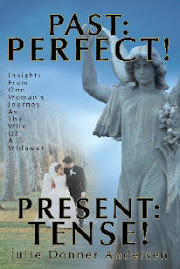
In my book “PAST: Perfect! PRESENT: Tense! Insights From One Woman’s Journey as the Wife of a Widower”, I urge my WOW (Wives Of Widowers) and GOW (Girlfriends Of Widowers) readers to embrace the late wife, and to remember that a relationship with a widower will be a marriage of three hearts, not just two. However, some people have misunderstood my meaning, erroneously assuming that this author believes a woman involved with a widower must willingly and dutifully step aside into the shadow of a sainted woman’s memory.
On the contrary, I believe a widower must treat his new love as the center of his universe, barring all others, including his late wife. However, to have a successful relationship with a widower, his new love must accept his past, including his late wife, and remember that she was, as most wives are, instrumental in making him the man he is today. I truly believe that outward jealousy of and disdain towards the late wife only serves to create an atmosphere of bitterness and resentment – emotions that build walls between a couple. Sharing a widower’s heart with his late wife does not mean his new love must take a back seat and quietly allow the late wife’s memory to stand between the couple. Sharing his heart simply means that the new woman in his life understands and accepts that the love he had for his late spouse did not die with her, and will always occupy a space in his heart.
But does a late spouse have to be a huge part of your present relationship with a widowed man, if at all?
Many girlfriends and wives of widowers (GOWs and WOWs) have written to me, asking when they might expect their widowers to stop droning on and on about his late wife. Hearing about another woman in your man’s past is difficult to handle. We certainly don’t expect a divorced man to talk about the good times he and his ex shared, and we feel righteous indignation when any man discusses, ad nauseum, within listening distance of his present love, the wonderful attributes of the ex-lovers who broke his heart. Doing so would be the ultimate in insensitivity. Yet society expects a woman involved with a widower to sit silently and put her personal feelings on the back burner while her widower lovingly recalls each and every personal detail about his late wife and their marriage.
A friend of mine once chastised my own angst about my widower’s tendency to memorialize his late wife by asking, “Why does it bother you so much? It’s not like she’s a threat or anything…she’s dead!” Clearly, those who have no stake in a relationship with a widower have no clue about - and no patience for - how hurtful and confusing this issue can be to the new woman in his life. Bottom line: the constant stirring and recalling of the memories of a deceased spouse CAN be harmful if it impedes the growth of a new relationship.
Some widowers with whom I have spoken regarding this issue have justified it by claiming they freely converse with their present loves about their late wives so that the former will “get to know” the latter. These widowers feel a need to bond their late spouses with their present loves. I have to wonder why they feel it is necessary, in their minds, for the late wife and present love to be friends. To what end do these means serve? Why would a man expect his new love to gleefully embrace this odd emotional “ménage a trios”, and what women of self-worth and esteem would settle for it without argument?
Sometimes, a widower who purposefully shares intimate information about his late wife and their marriage with their present love is subconsciously looking for permission of sorts to fall in love again. To wit, he is hoping to be exonerated from the guilt he carries about moving on and leaving his memories – and his late wife - permanently in the past. He not only hopes his new love will accept that a part of his heart will always belong to another, but that his late wife will forgive him his imagined betrayal of her. However, doing so only delays his grief recovery as he perpetually memorializes his late wife. (Note: Ws don't [usually] look skyward and ask for LW's permission, lest any supposed "journalist" take my words out of context. I am talking about the W's subconscious here.)
Some widowers feel that in order for his new love to fully and completely understand and accept him for the person he is, it is paramount that she understands the depth of his love for his late wife. In my opinion, if a man thinks his late wife defines who he is and is the main source of his character, then he has not yet matured enough to grasp a very important understanding: the measure of a man is not who shaped him, but how he has used his life experiences to become the man he is. An appreciation for those in our lives who have contributed to our successes is vital, yes…but to claim these selfless mentors possess our personhood is the antithesis of personal growth.
Often times, discussing memories of a late spouse gives strength to the survivor. A widower cannot completely let go of the past unless and until every stone is unturned. He cannot move beyond bereavement until he embraces the past pain as well as its pleasures. Grief is not just an emotion but also a process. I once asked my previously widowed husband when he knew he had successfully let go of the past. He answered, “When I could smile instead of cry when remembering her.” Processing memories is an important step toward grief recovery. Therefore, it would appear logical that a widower who yearns to discuss his late wife and their shared past is thirsty to move on with his life. Thus, the act of verbally skipping down Memory Lane isn’t so insensitive after all.
Or is it?
When a partner in any kind of relationship disregards the feelings of his or her mate, this is insensitivity. Widowers I have spoken to about this issue ask me, “But I don’t understand WHY she (GOW or WOW) gets so upset when I talk about my late wife!” I reply that it would behove these men to ask the new mates personally so that they may acquire a deeper understanding of how it feels to love a man whose heart is apparently, as the old song says, “torn between two lovers.” I then counsel widowers to consider how they would feel if their new loves talked endlessly about their former lovers. Walking around in another person’s moccasins certainly sheds light on the issue. If a partner repeatedly asks his/her mate to cease and desist, that request should be respected, regardless of whether or not the reasoning behind the request is understood.
In conclusion, WOWs and GOWs must be sensitive to the fact that the widowers in their lives may have a need to discuss their late wives and marriages for a variety of reasons: to purge guilt, to complete the final stage of bereavement recovery, or to gain validation of his grief’s normalcy in sharing his intimate grief feelings with his new love. As such, a GOW/WOW would be wise to be sensitive to his feelings and learn to embrace the fact that his late wife will always be a treasured past memory, but not a present threat.
However, widowers must also be sensitive to the assumed threat the new love feels when there is more talk of the past and not enough reassurance and validation that the GOW/WOW in his life is Number One in his heart. When she pleads “Enough is enough!” the intelligent widower will respect her wishes as he attempts to gain insight, using honest communication, about the complex emotional and often misunderstood heart of a GOW/WOW.
In my book “PAST: Perfect! PRESENT: Tense! Insights From One Woman’s Journey as the Wife of a Widower”, I urge my WOW (Wives Of Widowers) and GOW (Girlfriends Of Widowers) readers to embrace the late wife, and to remember that a relationship with a widower will be a marriage of three hearts, not just two. However, some people have misunderstood my meaning, erroneously assuming that this author believes a woman involved with a widower must willingly and dutifully step aside into the shadow of a sainted woman’s memory.
On the contrary, I believe a widower must treat his new love as the center of his universe, barring all others, including his late wife. However, to have a successful relationship with a widower, his new love must accept his past, including his late wife, and remember that she was, as most wives are, instrumental in making him the man he is today. I truly believe that outward jealousy of and disdain towards the late wife only serves to create an atmosphere of bitterness and resentment – emotions that build walls between a couple. Sharing a widower’s heart with his late wife does not mean his new love must take a back seat and quietly allow the late wife’s memory to stand between the couple. Sharing his heart simply means that the new woman in his life understands and accepts that the love he had for his late spouse did not die with her, and will always occupy a space in his heart.
But does a late spouse have to be a huge part of your present relationship with a widowed man, if at all?
Many girlfriends and wives of widowers (GOWs and WOWs) have written to me, asking when they might expect their widowers to stop droning on and on about his late wife. Hearing about another woman in your man’s past is difficult to handle. We certainly don’t expect a divorced man to talk about the good times he and his ex shared, and we feel righteous indignation when any man discusses, ad nauseum, within listening distance of his present love, the wonderful attributes of the ex-lovers who broke his heart. Doing so would be the ultimate in insensitivity. Yet society expects a woman involved with a widower to sit silently and put her personal feelings on the back burner while her widower lovingly recalls each and every personal detail about his late wife and their marriage.
A friend of mine once chastised my own angst about my widower’s tendency to memorialize his late wife by asking, “Why does it bother you so much? It’s not like she’s a threat or anything…she’s dead!” Clearly, those who have no stake in a relationship with a widower have no clue about - and no patience for - how hurtful and confusing this issue can be to the new woman in his life. Bottom line: the constant stirring and recalling of the memories of a deceased spouse CAN be harmful if it impedes the growth of a new relationship.
Some widowers with whom I have spoken regarding this issue have justified it by claiming they freely converse with their present loves about their late wives so that the former will “get to know” the latter. These widowers feel a need to bond their late spouses with their present loves. I have to wonder why they feel it is necessary, in their minds, for the late wife and present love to be friends. To what end do these means serve? Why would a man expect his new love to gleefully embrace this odd emotional “ménage a trios”, and what women of self-worth and esteem would settle for it without argument?
Sometimes, a widower who purposefully shares intimate information about his late wife and their marriage with their present love is subconsciously looking for permission of sorts to fall in love again. To wit, he is hoping to be exonerated from the guilt he carries about moving on and leaving his memories – and his late wife - permanently in the past. He not only hopes his new love will accept that a part of his heart will always belong to another, but that his late wife will forgive him his imagined betrayal of her. However, doing so only delays his grief recovery as he perpetually memorializes his late wife. (Note: Ws don't [usually] look skyward and ask for LW's permission, lest any supposed "journalist" take my words out of context. I am talking about the W's subconscious here.)
Some widowers feel that in order for his new love to fully and completely understand and accept him for the person he is, it is paramount that she understands the depth of his love for his late wife. In my opinion, if a man thinks his late wife defines who he is and is the main source of his character, then he has not yet matured enough to grasp a very important understanding: the measure of a man is not who shaped him, but how he has used his life experiences to become the man he is. An appreciation for those in our lives who have contributed to our successes is vital, yes…but to claim these selfless mentors possess our personhood is the antithesis of personal growth.
Often times, discussing memories of a late spouse gives strength to the survivor. A widower cannot completely let go of the past unless and until every stone is unturned. He cannot move beyond bereavement until he embraces the past pain as well as its pleasures. Grief is not just an emotion but also a process. I once asked my previously widowed husband when he knew he had successfully let go of the past. He answered, “When I could smile instead of cry when remembering her.” Processing memories is an important step toward grief recovery. Therefore, it would appear logical that a widower who yearns to discuss his late wife and their shared past is thirsty to move on with his life. Thus, the act of verbally skipping down Memory Lane isn’t so insensitive after all.
Or is it?
When a partner in any kind of relationship disregards the feelings of his or her mate, this is insensitivity. Widowers I have spoken to about this issue ask me, “But I don’t understand WHY she (GOW or WOW) gets so upset when I talk about my late wife!” I reply that it would behove these men to ask the new mates personally so that they may acquire a deeper understanding of how it feels to love a man whose heart is apparently, as the old song says, “torn between two lovers.” I then counsel widowers to consider how they would feel if their new loves talked endlessly about their former lovers. Walking around in another person’s moccasins certainly sheds light on the issue. If a partner repeatedly asks his/her mate to cease and desist, that request should be respected, regardless of whether or not the reasoning behind the request is understood.
In conclusion, WOWs and GOWs must be sensitive to the fact that the widowers in their lives may have a need to discuss their late wives and marriages for a variety of reasons: to purge guilt, to complete the final stage of bereavement recovery, or to gain validation of his grief’s normalcy in sharing his intimate grief feelings with his new love. As such, a GOW/WOW would be wise to be sensitive to his feelings and learn to embrace the fact that his late wife will always be a treasured past memory, but not a present threat.
However, widowers must also be sensitive to the assumed threat the new love feels when there is more talk of the past and not enough reassurance and validation that the GOW/WOW in his life is Number One in his heart. When she pleads “Enough is enough!” the intelligent widower will respect her wishes as he attempts to gain insight, using honest communication, about the complex emotional and often misunderstood heart of a GOW/WOW.
Monday, April 13, 2009
Long-Distance and/or Online Romance: Nice, But At What Cost?
There is something very romantic about a long-distance relationship, especially for those who are prone to romanticism, i.e., the poets and writers among us. Ahem ;) :)
Oh yes, we loooove to write pages and pages about our deepest feelings, oftentimes peppering our love letters with "one-liners of love" that we might not have the guts to utter in person. The early months of dating long-distance can be quite infatuating for the romantics among us. It is a time when our heart's pencil is most sharp. With one well-written line, the romantic becomes the hero of their own creation; at times, becoming a larger-than-life character in their own plays.
At once charming and seemingly sincere, always penning just the right words to capture a new lover's heart, romantics start to feel as swept away as the objects of their affection do. In this way, two needs are filled: the poet's, because they need to pour out their hearts in written form...and the new love's, because they need to be flattered and romanced. It is a sweet, perfect world they share...a place where neither is flawed and life is always good.
Sadly, romantics ALWAYS (and I mean, ALWAYS!) fall hard when reality sets in. So do their paramours. Reality's harsh light, like overhead lighting in department store dressing rooms, can be quite revealing, showing every major flaw otherwise overlooked or disguised. That space of time between the charm of romanticism and the reality of real life can be quite a large pothole in the road of the poet's & paramour's relationship, out from which many cannot dig themselves. Those who do manage to climb out discover that they are no longer as infatuated with their new love as they were when the lighting was dimmer and the world was a dreamy self-created fantasy. Those couples who DO climb out and work together to meld the romantic with the realistic have the best chance of making it, but they may always feel that something was lost along the way.
Case in point:
Hubs and I met online in a widows & widowers chat room (at the time, I was researching chat rooms for an article I, as a freelancer, was commissioned to write about them). His posts to other survivors melted my heart. On the back-and-forth letters/e-mails we two hungry romantics sent to each other were written words like those of gothic novels, dripping with sweet sentimentality and love so divine, they would have made Satan himself swoon. It had been many, many years since I had been so hunted and chased, so flattered and infatuated. Hubs' words spun gold in my heart and wove a tapestry so intricate that I floated instead of walked, laughed instead of cried, and reeled with delight from the power of his silky threads of lovingly written words.
In my mind, he had become perfect, infallible, and pleasantly unreal, so unlike anything I had ever experienced. In my mind, I had created my own personal knight in shining armor who had come to save me from my painful post-divorce misery. With each in-person meeting/date, Hubs' armor became more and more dented as the reality of his normal human imperfections was revealed. Where, oh where was my white knight...and who was this clumsy-talking shy clown taking his place? (LOL!) I can't explain WHY I was so shocked....perhaps because I had built him up so much in my mind (with his help, of course!) as this mythical creature that ANY tiny imperfection reality revealed about him to me would messed with my sense of need. Whatever its reason, the transition was indeed painful.
However, long story short....Although the heady feeling that accompanies being romanced diminished, with time, the acceptance of each other for who we really were took hold as we began the slow process of climbing out from the pothole of long-distance romantic infatuation into a new reality - one that still included romantic overtures, but one that became solidly based in the daily give-and-take required for relationships to grow.
Reality is no picnic, and the knight gave me respite from the harshness of my daily living at a time when I needed the rest so badly. But with a LOT of perseverance and a willingness to create a new kind of love, we both tempered the poets inside of us with the imperfect people we were, and thus forged a more realistic yet still sentimental bond.
I must admit with great sadness that I miss the fantasy of the white knight...
Gone are the long, drippingly sweet pages and pages of uninhibited written confessions of his heart. Thankfully, in their place, my W has written in indelible ink upon my heart an unspoken love that I can count on to always be there.
Gone are the "all-nighters" when we would lovingly express until dawn's early light our deepest dreams and desires for our future, in whispered tones and with giddy anticipation. Thankfully, in their place, my W has worked hard in the real world to make a future for us that is mortgage-free and retirement-ready, thus securing my heart to his.
Gone are the days of revelling in each other’s romantically-eschewed perfection. Thankfully, in their place, we have faced the harsh lighting of reality, revealing all of our worst human imperfections, and yet loving each other in spite of them all.
Has it been easy? Lord, no! The transition from romantic fantasy to reality would have been MUCH simpler if only we had done the mature thing and revealed to each other in bits and pieces our human flaws. In short, while reality may be harsh, you cannot make a life with a fantasy.
Thankfully, once in awhile, when I least expect it, the white knight returns for a visit (usually carrying flowers!), if only to remind me that he still exists but in a different form. This new knight - a blend of the romantic and the realistic - is a better person in whom I can place my trust instead of putting my future in the hands of a created persona who was better at sweeping me off my feet than helping me sweep the floors of our family home.
Oh yes, we loooove to write pages and pages about our deepest feelings, oftentimes peppering our love letters with "one-liners of love" that we might not have the guts to utter in person. The early months of dating long-distance can be quite infatuating for the romantics among us. It is a time when our heart's pencil is most sharp. With one well-written line, the romantic becomes the hero of their own creation; at times, becoming a larger-than-life character in their own plays.
At once charming and seemingly sincere, always penning just the right words to capture a new lover's heart, romantics start to feel as swept away as the objects of their affection do. In this way, two needs are filled: the poet's, because they need to pour out their hearts in written form...and the new love's, because they need to be flattered and romanced. It is a sweet, perfect world they share...a place where neither is flawed and life is always good.
Sadly, romantics ALWAYS (and I mean, ALWAYS!) fall hard when reality sets in. So do their paramours. Reality's harsh light, like overhead lighting in department store dressing rooms, can be quite revealing, showing every major flaw otherwise overlooked or disguised. That space of time between the charm of romanticism and the reality of real life can be quite a large pothole in the road of the poet's & paramour's relationship, out from which many cannot dig themselves. Those who do manage to climb out discover that they are no longer as infatuated with their new love as they were when the lighting was dimmer and the world was a dreamy self-created fantasy. Those couples who DO climb out and work together to meld the romantic with the realistic have the best chance of making it, but they may always feel that something was lost along the way.
Case in point:
Hubs and I met online in a widows & widowers chat room (at the time, I was researching chat rooms for an article I, as a freelancer, was commissioned to write about them). His posts to other survivors melted my heart. On the back-and-forth letters/e-mails we two hungry romantics sent to each other were written words like those of gothic novels, dripping with sweet sentimentality and love so divine, they would have made Satan himself swoon. It had been many, many years since I had been so hunted and chased, so flattered and infatuated. Hubs' words spun gold in my heart and wove a tapestry so intricate that I floated instead of walked, laughed instead of cried, and reeled with delight from the power of his silky threads of lovingly written words.
In my mind, he had become perfect, infallible, and pleasantly unreal, so unlike anything I had ever experienced. In my mind, I had created my own personal knight in shining armor who had come to save me from my painful post-divorce misery. With each in-person meeting/date, Hubs' armor became more and more dented as the reality of his normal human imperfections was revealed. Where, oh where was my white knight...and who was this clumsy-talking shy clown taking his place? (LOL!) I can't explain WHY I was so shocked....perhaps because I had built him up so much in my mind (with his help, of course!) as this mythical creature that ANY tiny imperfection reality revealed about him to me would messed with my sense of need. Whatever its reason, the transition was indeed painful.
However, long story short....Although the heady feeling that accompanies being romanced diminished, with time, the acceptance of each other for who we really were took hold as we began the slow process of climbing out from the pothole of long-distance romantic infatuation into a new reality - one that still included romantic overtures, but one that became solidly based in the daily give-and-take required for relationships to grow.
Reality is no picnic, and the knight gave me respite from the harshness of my daily living at a time when I needed the rest so badly. But with a LOT of perseverance and a willingness to create a new kind of love, we both tempered the poets inside of us with the imperfect people we were, and thus forged a more realistic yet still sentimental bond.
I must admit with great sadness that I miss the fantasy of the white knight...
Gone are the long, drippingly sweet pages and pages of uninhibited written confessions of his heart. Thankfully, in their place, my W has written in indelible ink upon my heart an unspoken love that I can count on to always be there.
Gone are the "all-nighters" when we would lovingly express until dawn's early light our deepest dreams and desires for our future, in whispered tones and with giddy anticipation. Thankfully, in their place, my W has worked hard in the real world to make a future for us that is mortgage-free and retirement-ready, thus securing my heart to his.
Gone are the days of revelling in each other’s romantically-eschewed perfection. Thankfully, in their place, we have faced the harsh lighting of reality, revealing all of our worst human imperfections, and yet loving each other in spite of them all.
Has it been easy? Lord, no! The transition from romantic fantasy to reality would have been MUCH simpler if only we had done the mature thing and revealed to each other in bits and pieces our human flaws. In short, while reality may be harsh, you cannot make a life with a fantasy.
Thankfully, once in awhile, when I least expect it, the white knight returns for a visit (usually carrying flowers!), if only to remind me that he still exists but in a different form. This new knight - a blend of the romantic and the realistic - is a better person in whom I can place my trust instead of putting my future in the hands of a created persona who was better at sweeping me off my feet than helping me sweep the floors of our family home.
Subscribe to:
Posts (Atom)