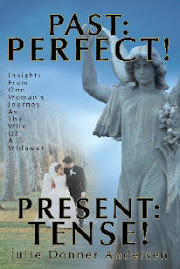
"Sex and the GOW/WOW" is a topic I barely touched upon in my book, and for good reason. Most wives and girlfriends of widowers with whom I communicated while doing research for the book told me that they secretly bury their issues on this subject, feeling so embarrassed and/or ashamed of their fears, insecurities, and feelings that they found it difficult to even discuss them with me under a cloak of anonymity! WHAT a shock, especially in today's sexually enlightened society!
Shocking, yes - but understandable. As a happily married wife of a widower, I, too, have been loathe to personally discuss this topic for fear that I would be judged harshly, perhaps even thought of as a tad crazy. But the fact remains - there exists in our society a small segment of women who have battled or continue to battle things unseen…even in the bedroom.
When I met my previously widowed husband, his late wife had been deceased for over three years. However, he still resided in the house they had shared together during their 7 year long married life, complete with all of their furniture, pictures adorning the walls, and even her coats hanging in the foyer closet. It looked as though she had just stepped out to the grocery store, and not died prematurely and suddenly three years prior.
My first visit to his home was to be our first night of romance. However, I constantly felt "her" presence. The mementos of her that I faced during my visit were reminders that I was merely a guest and not "the lady of the house". The most chilling remnant of her life was, of course, their bedroom. I doubt that my macho husband had chosen the pink and white lace bedspread and matching curtains after she had passed, so it was a reminder to me that this was at one time HER domain, causing me to feel like a trespasser and an adulteress.
Needless to say, it was a tad intimidating to me as his new love interest. The bed itself represented not only a place where they once laid their heads in rest, but also the shrine of intimacy where they once spoke of dreams, shared their feelings for each other, and yes…made passionate love. How could I possibly even think of coupling in such a way with him on the very same bed where they climbed the heights of passion and intertwined their souls as happily married people do? With closet doors flung widely open, I could almost picture her in the neatly hung and pressed negligee's that draped their way casually from padded hangers there. It felt almost voyeuristic to me.
Their wedding picture and wedding invitation were displayed in gilded frames which hung in all their glory over the bed, as if to speak for her: "You're about to make it with MY husband - you hussy!" Of course, this was not the picture-perfect, romantic evening that I had dreamed of! Too many ghosts.
Her belongings, which produced images of her, were not the only windmills at which I tilted. There was also the issue of comparison. How would I measure up - sexually speaking - to a woman who knew my then-boyfriend so intimately? Considering the fact that they dated for a year before marrying, they collectively shared 8 years of a loving relationship. This gave them plenty of time to figure out how to please each other, to chart the roadmaps of each other's bodies, and to communicate to each other their deepest romantic desires. Foreplay would have been set in stone, each knowing what turned the other on, and the dance of sexual passion would have been played out in satisfying synchronization. Gulp! What a tough act to follow!
Of course, making love for the first time with a new love interest is always nerve-provoking. But as a new lover of a former widower, I had an eerie feeling that "she" was watching us, as if to make sure that I would not "best" her in the sexual arena. Add to that mixture an almost omnipresent feeling - one that nudges your competitive nature and makes you feel that you and your lover are not the only two people in the bed - and you have a recipe for insecurity and thoughts of failure before you even begin to take your clothes off!
When the lights were dimmed and our passion sparked, I almost forgot about "her"…until I turned my head to face my sweetheart, and found his eyes closed. I wondered if he was thinking of "her". With every one of his touches, I insecurely thought that he may be imagining my body as her body. I started to doubt his whispered words of love for me, and felt that he was pretending to say them to her. I wondered if all the grief information I had read was true - that perhaps he may have had feelings of guilt for "betraying" his late wife's memory. I was filled with confusion…and anger. I was NOT the kind of person who would be willing to SHARE my man with another woman.
Bolting from the bedroom, I suppose my sweetie thought I was insane. But we had shared enough time together in our relationship history to forge a firm foundation of trust in our relationship, so I finally blurted out the truth about my fears and anxieties. It was the beginning of a new understanding…and a new life of sexual fulfillment for us.
Eventually, her closet's contents were donated to charity and the wedding pictures stored away for safekeeping. Their bed was sold, as was their house, and we bought our own home and purchased our own bed. But until that time, we had sweet, romantic trysts in hotel rooms and other rooms of the house where the late wife's presence was not so overpowering for me, and we made our own beautiful sexual memories together, away from "her" watchful eye. With gentle reassurance, my husband guided me out of my fears and convinced me that he had never compared my sexual prowess to his late wife's. He confirmed to me that I was a wonderful lover, partner, and friend, so I began to feel more secure about myself and about our relationship.
After a time, the threat of the late wife's memory ceased to exist, and no longer haunted me or forced me to "out-do" her in the bedroom. The pink and white lace bedspread was replaced with and a royal-colored floral comforter that now graces the mattresses where my husband and I renew our intertwined spirits with passion and speak of our future plans. This is now MY domain, and I am now "the lady of THIS house", relegating the late wife to the role of the outsider …a stranger whom I accept my husband will always love, but one who no longer trespasses on our lives in our bedroom.
~~From the book "PAST: Perfect! PRESENT: Tense! Insights From One Woman's Journey As The Wife of a Widower" by Julie Donner Andersen. (Copyright 2002/2003 Julie Donner Andersen. All rights reserved. Reprints only by written permission of author.)
Thursday, April 2, 2009

Wednesday, April 1, 2009
It's Only Human
When I was in the research phase of writing my book, I had contacted and communicated with over 100 WOWs (Wives Of Widowers). In order to find a common thread among all of us, I posed questions to each of them regarding what issues they had dealt with as a WOW. Oddly enough, the results of this survey often prompted me to reassure these women by uttering a quasi-patronizing, “That’s OK. It’s only human”.
It’s only human to feel threatened by a ghost who will always reside in your husband’s heart.
It’s only human to feel anxiety on the anniversary date of the late wife’s death.
It’s only human to wonder if your husband will ever love you the way he loved his late wife.
“It’s OK. I’m only human”. That’s partially true. I AM human. And because of this indisputable fact, it only follows that my feelings are human, too. But is it “OK” to have these feelings of self-doubt, anxiety, and fear?
In a word…no!
I had used this same statement of affirmation on myself when I first married my previously widowed husband. When the old “Insecurity Monster” reared its ugly head and forced me to react negatively or to feel threatened by the late wife’s memory and eerie presence in my marriage, I repeated over and over, “What I am feeling is normal…because I’m only human, after all”. In other words, I excused myself, and by doing so, I had glossed over my fears and allowed them to be pushed aside for the time being. I had not only used this lame excuse to feel better about my negative emotions, but I had also used it to avoid finding a solution to my problematic fears as well.
Why? What was the payoff for my hanging onto my insecurities? Did they benefit my marriage? Did they change the past? Did they make me stronger? Of course not. Negative emotions of fear, anxiety, and self-doubt are NOT of God. They are Satan’s tools, and he knows how to operate them put a wedge in your faith and to try to separate what God has joined together.
Yes, all emotions are human emotions. After all, Jesus was a human, and felt the negative emotion of fear in the Garden of Gethsemane. However, the big difference between what is human and what is divine was demonstrated by how Jesus handled His anxiety. He went straight to His Father in heaven and asked for strength. He did not stuff his negative emotions into his pocket. Rather, he focused on a solution. And by doing so, He illustrated that that is what He wants us to do, too.
It is easy to do or feel what comes naturally…to do or feel what is human. But Christ calls us to do what is spiritual…and divine. He wants us to come unto Him, release our burdens, then be still and know that He will deliver. In Psalm 56:3, the Lord speaks through the psalmist and reminds us of this: “When I am afraid, I put my trust in You”. God wants us to trust our faith and not our humanness.
It would be arrogant for me, either as advice for my fellow WOWs or even for myself, to ever utter the phrase “It’s OK…I’m only human!” ever again, as if what is human supercedes what is Spirit-directed. My humanity does not solve the problems of fear, anxiety, or insecurity. Most of the time, my humanness only serves to exacerbate my problems.
Of course my human feelings and those of my sister HOWs and WOWs are real and worthy of mention, perhaps even validation. But when we rely on ourselves - on our humanness - to excuse away our negative feelings, we stop putting our trust in God, and the result is a separation from the only One who can comfort, love, and strengthen us out of the darkness of our negative humanity - and get us back to the business of Loving A Widower....
(Copyright 2009 Julie Donner Andersen. All rights reserved. No reprints without author permission.)
It’s only human to feel threatened by a ghost who will always reside in your husband’s heart.
It’s only human to feel anxiety on the anniversary date of the late wife’s death.
It’s only human to wonder if your husband will ever love you the way he loved his late wife.
“It’s OK. I’m only human”. That’s partially true. I AM human. And because of this indisputable fact, it only follows that my feelings are human, too. But is it “OK” to have these feelings of self-doubt, anxiety, and fear?
In a word…no!
I had used this same statement of affirmation on myself when I first married my previously widowed husband. When the old “Insecurity Monster” reared its ugly head and forced me to react negatively or to feel threatened by the late wife’s memory and eerie presence in my marriage, I repeated over and over, “What I am feeling is normal…because I’m only human, after all”. In other words, I excused myself, and by doing so, I had glossed over my fears and allowed them to be pushed aside for the time being. I had not only used this lame excuse to feel better about my negative emotions, but I had also used it to avoid finding a solution to my problematic fears as well.
Why? What was the payoff for my hanging onto my insecurities? Did they benefit my marriage? Did they change the past? Did they make me stronger? Of course not. Negative emotions of fear, anxiety, and self-doubt are NOT of God. They are Satan’s tools, and he knows how to operate them put a wedge in your faith and to try to separate what God has joined together.
Yes, all emotions are human emotions. After all, Jesus was a human, and felt the negative emotion of fear in the Garden of Gethsemane. However, the big difference between what is human and what is divine was demonstrated by how Jesus handled His anxiety. He went straight to His Father in heaven and asked for strength. He did not stuff his negative emotions into his pocket. Rather, he focused on a solution. And by doing so, He illustrated that that is what He wants us to do, too.
It is easy to do or feel what comes naturally…to do or feel what is human. But Christ calls us to do what is spiritual…and divine. He wants us to come unto Him, release our burdens, then be still and know that He will deliver. In Psalm 56:3, the Lord speaks through the psalmist and reminds us of this: “When I am afraid, I put my trust in You”. God wants us to trust our faith and not our humanness.
It would be arrogant for me, either as advice for my fellow WOWs or even for myself, to ever utter the phrase “It’s OK…I’m only human!” ever again, as if what is human supercedes what is Spirit-directed. My humanity does not solve the problems of fear, anxiety, or insecurity. Most of the time, my humanness only serves to exacerbate my problems.
Of course my human feelings and those of my sister HOWs and WOWs are real and worthy of mention, perhaps even validation. But when we rely on ourselves - on our humanness - to excuse away our negative feelings, we stop putting our trust in God, and the result is a separation from the only One who can comfort, love, and strengthen us out of the darkness of our negative humanity - and get us back to the business of Loving A Widower....
(Copyright 2009 Julie Donner Andersen. All rights reserved. No reprints without author permission.)
Sunday, March 29, 2009
Giving Credit Where Credit Is Due
Everyone has a past history of prior love relationships: ex-boyfriends or ex-husbands, past lovers, and/or former friends. Each person from our past has contributed in some way to our personal growth. Even if the relationship ended badly, most people can honestly admit that they learned a lesson, gained insight or wisdom, and used the experience to forge a better understanding of self. If personal growth is a good thing, then it makes sense that we should be grateful to the people from our pasts, as they have played a part in molding our unique characters.
Alas, it’s hard to dole out praise to these folks if, for some reason, we harbor old resentments against them. If they broke our hearts or hurt us deeply, human nature interferes with our ability to say, “Thanks for all you did to help make me the person I have become!” but in truth, that’s precisely what the experience these relationships have afforded us has done.
If you are married, do you believe that your spouse has changed you in a positive way? Do you believe that you have changed your spouse? Have you made each other stronger, happier, more patient, understanding, caring, or loving? More importantly, have you helped each other to grow as individual people? I’m sure a majority of married folk would respond “yes” to all of these questions.
Then why does a WOW (or a GOW, for that matter) find it so difficult to not give credit where credit is due and be grateful to the late wife for the positive influence she had on her husband?
Perhaps it’s because GOWs and WOWs are not afforded the luxury of “closure”. Unlike divorced men, widowers did not choose to leave their wives. Death chose FOR them. And unlike divorced men who fall out of love with their ex-wives, widowers will always feel a great deal of love for their late wives. This lack of closure in a widower’s past tends to extend to their future wives to some degree. The late wife, unlike the ex-wife, is not “locked out” of her husband’s heart. Thus, a widower’s new wife must learn to share the same space in his heart that the late wife occupies.
This is a difficult thing for any woman to do. We are a jealous and possessive gender, and find it absurd to accept that our spouses can love two women at the same time. This jealousy can fuel the fires of insecurity rapidly. To overcome feeling “second best”, we tend to compete with the late wife’s memory, vying for that coveted “first place” position in our husbands’ memory. Yet this becomes a frustrating “two steps forward, one step back” race to the finish. In the whirlwind of negative emotions that ensues, we become blinded to one important reality: The widowed men with whom we fell in love would perhaps not be a perfect match for us today had they not been happily married before.
Because my husband was happily married once before, he learned how to be a great husband, which has benefited me immensely as his new wife. Because he kept his first “in sickness and in health” wedding vow while he cared for a dying wife, he has proven his worth as an honorable, upstanding, and loyal man. And most importantly, because his late wife loved him dearly and respected him greatly, he was encouraged toward personal growth and evolved into the man of my dreams.
I urge all WOWs ad GOWs to reap the benefits of the their husbands’ late wives’ legacies and, in gratitude, give credit where credit is due. This is an important part of Loving A Widower...
Alas, it’s hard to dole out praise to these folks if, for some reason, we harbor old resentments against them. If they broke our hearts or hurt us deeply, human nature interferes with our ability to say, “Thanks for all you did to help make me the person I have become!” but in truth, that’s precisely what the experience these relationships have afforded us has done.
If you are married, do you believe that your spouse has changed you in a positive way? Do you believe that you have changed your spouse? Have you made each other stronger, happier, more patient, understanding, caring, or loving? More importantly, have you helped each other to grow as individual people? I’m sure a majority of married folk would respond “yes” to all of these questions.
Then why does a WOW (or a GOW, for that matter) find it so difficult to not give credit where credit is due and be grateful to the late wife for the positive influence she had on her husband?
Perhaps it’s because GOWs and WOWs are not afforded the luxury of “closure”. Unlike divorced men, widowers did not choose to leave their wives. Death chose FOR them. And unlike divorced men who fall out of love with their ex-wives, widowers will always feel a great deal of love for their late wives. This lack of closure in a widower’s past tends to extend to their future wives to some degree. The late wife, unlike the ex-wife, is not “locked out” of her husband’s heart. Thus, a widower’s new wife must learn to share the same space in his heart that the late wife occupies.
This is a difficult thing for any woman to do. We are a jealous and possessive gender, and find it absurd to accept that our spouses can love two women at the same time. This jealousy can fuel the fires of insecurity rapidly. To overcome feeling “second best”, we tend to compete with the late wife’s memory, vying for that coveted “first place” position in our husbands’ memory. Yet this becomes a frustrating “two steps forward, one step back” race to the finish. In the whirlwind of negative emotions that ensues, we become blinded to one important reality: The widowed men with whom we fell in love would perhaps not be a perfect match for us today had they not been happily married before.
Because my husband was happily married once before, he learned how to be a great husband, which has benefited me immensely as his new wife. Because he kept his first “in sickness and in health” wedding vow while he cared for a dying wife, he has proven his worth as an honorable, upstanding, and loyal man. And most importantly, because his late wife loved him dearly and respected him greatly, he was encouraged toward personal growth and evolved into the man of my dreams.
I urge all WOWs ad GOWs to reap the benefits of the their husbands’ late wives’ legacies and, in gratitude, give credit where credit is due. This is an important part of Loving A Widower...
Friday, March 27, 2009
Taking The "I Love You" Leap Of Faith
“Matt?”
“Hmm?”
“I love you.”
“Umm…I…*gulp*…need a snack. Be right back.” ZOOOOOOOOOM!
Sound familiar?
Ahhhh, love. According to the songs, love is a many splendor’ed thing. It makes the world go ‘round. It’s all you need.
Excuse me, but at the risk of sounding anti-Cupid….Humbug! When it comes to dating a new widower who has never had a relationship with anyone besides his late wife, you need a whole lot more than love: you need patience, compassion, and most of all…courage!
Yes, COURAGE!
Who else in their right mind, besides a GOW (Girlfriend Of a Widower), would share her man’s heart with another woman (the late wife)?
Who else besides a GOW understands that on certain days of the year (death anniversary, late wife birthday, wedding anniversary, etc.), her man’s heart will be broken by grief triggers, and she will be temporarily demoted to “grief therapist” for the day?
Who else but a GOW? No one, that’s who!
Try to envision your girlfriends’ mouths agape if you were to explain to them the same scenario about a divorced man you’ve been dating:
“Hey, gals, it’s the 1st anniversary of my man’s divorce today. He’s pretty low about it. He’s going to go visit her and take flowers. There’ll probably be a lot of tears as he reminisces about “the good times” they shared together, and I plan to just hold his hand and listen with compassion when he gets home. So whaddya say – wanna go get a cup of coffee while he makes his house call?”
KER-plop! (The sound of your girlfriends’ jaws hitting the floor).
Yet, this is precisely what a GOW deals with in her relationship; things that can only be handled with compassion, love, and yes…COURAGE! Being in love with a widower takes GUTS, and lots of them! It takes a strong sense of self without insecurity, an inner peace free of competitiveness, a rock-solid faith in silver linings, a willingness to sacrifice one’s self for the greater good of bereavement recovery, and the patience and knowledge that most if not all "things grief” subside with time.
Most GOWs I have met or with whom I have communicated online share these stellar character traits. Yet when it comes to saying “I love you” for the first time, these same pillars of Samson-ish strength are reduced to peanut butter.
So what gives? Why are these otherwise gutsy women so afraid of beating their widowed boyfriends to the punch by uttering those three anticipated words that will express what is in their hearts?
Simple: they are afraid of the inevitable comparison to “the one he loved first and still does”, AKA: the late wife. It is an anxiety that all GOWs share.
Fear of the unknown is the greatest fear of all. Confessing our true feelings to someone for the first time is downright scary. As much as we try to predict the outcome of our love professions with accuracy, widowers new to dating are largely unpredictable. Confess your feelings too soon, and he may run screaming into the night. Too late, and he may wonder if you really mean it or are just testing the relationship waters.
Even if the timing is perfect, he may still balk, wondering if how he feels for you is equal in quality and quantity as what you feel for him…wondering if his loving feelings are real or if he is simply on the rebound…feeling guilty for having loving feelings for you – feelings that are perhaps stronger than his feelings for his late wife…pushing his true feelings down because having them is akin to betraying his late wife or cheating on her in some strange way…wondering why he doesn’t feel the same way about you that he did about his late wife…and the list goes on, unpredictably.
So what is a GOW to do? Should she chicken out? Send a Hallmark card that will say it for her? Ask a friend to relay the message? Nahhh. What’s the fun in that? We profess our love feelings for a man TO a man because we want him to know how we feel, but admit it, gals…more importantly, we want to hear the same in return. And if we didn’t take that leap of faith and verbally blurt our heart’s contents to his face, we would miss out on the biggest thrill life has to offer: hearing a man say “I love you, too” for the first time...and meaning it.
In relationships without risk, there is no reward - just limbo. Even if your declaration of love is met with his declaration of fear, guilt, or ambivalence, the risk is still worth taking. Why? Because every baby step you take as a GOW is one step closer to the knowing the truth of a widower’s heart – how he feels, where he stands, and what the future holds for the two of you.
Unlocking the contents of a widower’s heart takes patience, understanding, and a willingness to wait until he is 100% sure that his response will be 100% honest and without reservations. There is no better road to this kind of discovery than to take a deep breath, look him square in the eyes, tell him how you feel…then let the chips fall where they may. I guarantee that the discussion to follow will not only be eye-opening but bonding as well – whether he reciprocates or not. Then you can get back to the business of Loving A Widower....
“Hmm?”
“I love you.”
“Umm…I…*gulp*…need a snack. Be right back.” ZOOOOOOOOOM!
Sound familiar?
Ahhhh, love. According to the songs, love is a many splendor’ed thing. It makes the world go ‘round. It’s all you need.
Excuse me, but at the risk of sounding anti-Cupid….Humbug! When it comes to dating a new widower who has never had a relationship with anyone besides his late wife, you need a whole lot more than love: you need patience, compassion, and most of all…courage!
Yes, COURAGE!
Who else in their right mind, besides a GOW (Girlfriend Of a Widower), would share her man’s heart with another woman (the late wife)?
Who else besides a GOW understands that on certain days of the year (death anniversary, late wife birthday, wedding anniversary, etc.), her man’s heart will be broken by grief triggers, and she will be temporarily demoted to “grief therapist” for the day?
Who else but a GOW? No one, that’s who!
Try to envision your girlfriends’ mouths agape if you were to explain to them the same scenario about a divorced man you’ve been dating:
“Hey, gals, it’s the 1st anniversary of my man’s divorce today. He’s pretty low about it. He’s going to go visit her and take flowers. There’ll probably be a lot of tears as he reminisces about “the good times” they shared together, and I plan to just hold his hand and listen with compassion when he gets home. So whaddya say – wanna go get a cup of coffee while he makes his house call?”
KER-plop! (The sound of your girlfriends’ jaws hitting the floor).
Yet, this is precisely what a GOW deals with in her relationship; things that can only be handled with compassion, love, and yes…COURAGE! Being in love with a widower takes GUTS, and lots of them! It takes a strong sense of self without insecurity, an inner peace free of competitiveness, a rock-solid faith in silver linings, a willingness to sacrifice one’s self for the greater good of bereavement recovery, and the patience and knowledge that most if not all "things grief” subside with time.
Most GOWs I have met or with whom I have communicated online share these stellar character traits. Yet when it comes to saying “I love you” for the first time, these same pillars of Samson-ish strength are reduced to peanut butter.
So what gives? Why are these otherwise gutsy women so afraid of beating their widowed boyfriends to the punch by uttering those three anticipated words that will express what is in their hearts?
Simple: they are afraid of the inevitable comparison to “the one he loved first and still does”, AKA: the late wife. It is an anxiety that all GOWs share.
Fear of the unknown is the greatest fear of all. Confessing our true feelings to someone for the first time is downright scary. As much as we try to predict the outcome of our love professions with accuracy, widowers new to dating are largely unpredictable. Confess your feelings too soon, and he may run screaming into the night. Too late, and he may wonder if you really mean it or are just testing the relationship waters.
Even if the timing is perfect, he may still balk, wondering if how he feels for you is equal in quality and quantity as what you feel for him…wondering if his loving feelings are real or if he is simply on the rebound…feeling guilty for having loving feelings for you – feelings that are perhaps stronger than his feelings for his late wife…pushing his true feelings down because having them is akin to betraying his late wife or cheating on her in some strange way…wondering why he doesn’t feel the same way about you that he did about his late wife…and the list goes on, unpredictably.
So what is a GOW to do? Should she chicken out? Send a Hallmark card that will say it for her? Ask a friend to relay the message? Nahhh. What’s the fun in that? We profess our love feelings for a man TO a man because we want him to know how we feel, but admit it, gals…more importantly, we want to hear the same in return. And if we didn’t take that leap of faith and verbally blurt our heart’s contents to his face, we would miss out on the biggest thrill life has to offer: hearing a man say “I love you, too” for the first time...and meaning it.
In relationships without risk, there is no reward - just limbo. Even if your declaration of love is met with his declaration of fear, guilt, or ambivalence, the risk is still worth taking. Why? Because every baby step you take as a GOW is one step closer to the knowing the truth of a widower’s heart – how he feels, where he stands, and what the future holds for the two of you.
Unlocking the contents of a widower’s heart takes patience, understanding, and a willingness to wait until he is 100% sure that his response will be 100% honest and without reservations. There is no better road to this kind of discovery than to take a deep breath, look him square in the eyes, tell him how you feel…then let the chips fall where they may. I guarantee that the discussion to follow will not only be eye-opening but bonding as well – whether he reciprocates or not. Then you can get back to the business of Loving A Widower....
Wednesday, March 25, 2009
Why Are We Afraid To Ask "The Tough Questions" Of Our Widowers?
After my book was released, I was deluged with letters from wives of widowers, wondering how I found the courage to ask my previously widowed husband about his late wife and their marriage. While I appreciate being thought of as courageous, asking “the tough questions” was more a matter of necessity than bravery for me…and for our marriage.
I have always felt that the greatest fear of all is the fear of the unknown. When left to our own devices, our imaginations can work overtime, wreaking havoc on our insecurities and vulnerabilities. When we privately wonder about things that concern our happiness and mental well being, we tend to lean towards the negative, assuming that the tough questions, if asked aloud, will be met with answers we are not ready to hear…or that will be the opposite of what we hope to hear.
Surprisingly, that’s usually never the case. Information, like education, allows us to calm our fears, put them into perspective, and in most cases, brings peace and relief to a worried soul. Even the painful answers to the tough questions can at least be digested with time. Truth has a way of winning out over the worst of fears.
So what are we so afraid of?
We are afraid that our questions will be perceived as nosy, insensitive, none of our business, or regarded as insignificant by the person we are asking. We fear being judged for appearing needy. We fear the perceived and/or anticipated fight that may ensue as a result of hurt feelings. And worst of all, we fear that the answers will be too shocking or painful to endure.
However, husbands and wives communicate with each other the most intimate, secret, personal things that two people can utter to one another. By doing this, their relationships deepen and their marital bonds are strengthened. Being privy to another’s deepest thoughts, feelings, beliefs, and opinions is an honor. It means that the person sharing this vital information trusts the receiver implicitly, and is assured that the listener will not judge nor hold said information against him or her.
Trust is a two way street. Respecting the answers to tough questions is just as important as being respected for asking the questions. To be trusted, one must be trustworthy. Wives of widowers must first decide if they are capable of handling whatever their husbands respond, whether the answers leave them feeling good or not. They must also decide, before posing the questions, whether the answers will help them overcome fears, issues, and insecurities, thus leading to a stronger relationship.
Case in point: When my husband I were planning our first Christmas together as a married couple, I wondered to myself why I should try so hard to make it nice for us if his grief would only make for a miserable holiday. I wanted cookie cutter perfection for my holiday, complete with Martha Stewart-ish dinners, parties, and decorations…without the interference of “The Grief Monster” or “The Ghost of Christmas Past”. But it was painfully obvious to me, even though he spoke nary a word about it, that my husband grieved his late wife’s loss at this special time of year, just as he did in the past when we were dating. The act of marrying me did not make his grief miraculously disappear.
I had a choice: Either I could muddle through and pretend for both of us to have a good time (but fooling nobody!), or I could gently confront my husband and ask the tough questions about how he would like to proceed with the holiday festivities in respect to his grief.
Brave, yes, but necessary. I needed to discuss my husband's feelings with him so I could make plans based on them. I needed to know his answers so I could be as much of a helpmate to him as I could be through this sentimental time of grief. As well, his answers would also provide me with insight into his grief journey, enabling me to gauge where he was at and if healing was rooting or not. That way, I could prepare my own heart for whatever was to come.
I trusted my husband not to judge me for asking, and he trusted me with his revelations about Christmases shared with his late wife, and how he missed certain traditions of old. Because of our little discussion, we were able to form a united front in the face of grief, incorporate old traditions with new, and enjoy the present holiday and each other.
But are some questions too sacred…too personal…too scary to ask a spouse? In respect to present wives asking tough questions to previously widowed husbands, the answer, in my opinion, is a resounding “No!” Keeping secrets, for whatever personal reasons, is not a healthy thing for anyone to do to a sacred blend of two souls into one, which is what marriage is all about: one soul, one mind, one love...and a willingness to share everything about one’s self with your soul mate.
If you are a wife of a widower, you must first be aware of your reasons behind your questions. Do you want to know about your husband’s sex life with his late wife? First, ask yourself why. Would his answers be beneficial to making your own sex life more interesting and enjoyable? Or is this a “loaded” question – the answer to which will only serve as justification of your insecurities and plunge you deeper into your own self-serving pity party?
The answers to the tough questions are like constructive criticisms – you may not like what you hear, but with a heart full of grace and respect for the one who delivers the answers, you can easily find a positive way to utilize the information...as long as you take “self” out of the equation, and just concentrate on Loving A Widower.
~~Copyright 2009 Julie Donner Andersen. No reprints without express permission from author.
I have always felt that the greatest fear of all is the fear of the unknown. When left to our own devices, our imaginations can work overtime, wreaking havoc on our insecurities and vulnerabilities. When we privately wonder about things that concern our happiness and mental well being, we tend to lean towards the negative, assuming that the tough questions, if asked aloud, will be met with answers we are not ready to hear…or that will be the opposite of what we hope to hear.
Surprisingly, that’s usually never the case. Information, like education, allows us to calm our fears, put them into perspective, and in most cases, brings peace and relief to a worried soul. Even the painful answers to the tough questions can at least be digested with time. Truth has a way of winning out over the worst of fears.
So what are we so afraid of?
We are afraid that our questions will be perceived as nosy, insensitive, none of our business, or regarded as insignificant by the person we are asking. We fear being judged for appearing needy. We fear the perceived and/or anticipated fight that may ensue as a result of hurt feelings. And worst of all, we fear that the answers will be too shocking or painful to endure.
However, husbands and wives communicate with each other the most intimate, secret, personal things that two people can utter to one another. By doing this, their relationships deepen and their marital bonds are strengthened. Being privy to another’s deepest thoughts, feelings, beliefs, and opinions is an honor. It means that the person sharing this vital information trusts the receiver implicitly, and is assured that the listener will not judge nor hold said information against him or her.
Trust is a two way street. Respecting the answers to tough questions is just as important as being respected for asking the questions. To be trusted, one must be trustworthy. Wives of widowers must first decide if they are capable of handling whatever their husbands respond, whether the answers leave them feeling good or not. They must also decide, before posing the questions, whether the answers will help them overcome fears, issues, and insecurities, thus leading to a stronger relationship.
Case in point: When my husband I were planning our first Christmas together as a married couple, I wondered to myself why I should try so hard to make it nice for us if his grief would only make for a miserable holiday. I wanted cookie cutter perfection for my holiday, complete with Martha Stewart-ish dinners, parties, and decorations…without the interference of “The Grief Monster” or “The Ghost of Christmas Past”. But it was painfully obvious to me, even though he spoke nary a word about it, that my husband grieved his late wife’s loss at this special time of year, just as he did in the past when we were dating. The act of marrying me did not make his grief miraculously disappear.
I had a choice: Either I could muddle through and pretend for both of us to have a good time (but fooling nobody!), or I could gently confront my husband and ask the tough questions about how he would like to proceed with the holiday festivities in respect to his grief.
Brave, yes, but necessary. I needed to discuss my husband's feelings with him so I could make plans based on them. I needed to know his answers so I could be as much of a helpmate to him as I could be through this sentimental time of grief. As well, his answers would also provide me with insight into his grief journey, enabling me to gauge where he was at and if healing was rooting or not. That way, I could prepare my own heart for whatever was to come.
I trusted my husband not to judge me for asking, and he trusted me with his revelations about Christmases shared with his late wife, and how he missed certain traditions of old. Because of our little discussion, we were able to form a united front in the face of grief, incorporate old traditions with new, and enjoy the present holiday and each other.
But are some questions too sacred…too personal…too scary to ask a spouse? In respect to present wives asking tough questions to previously widowed husbands, the answer, in my opinion, is a resounding “No!” Keeping secrets, for whatever personal reasons, is not a healthy thing for anyone to do to a sacred blend of two souls into one, which is what marriage is all about: one soul, one mind, one love...and a willingness to share everything about one’s self with your soul mate.
If you are a wife of a widower, you must first be aware of your reasons behind your questions. Do you want to know about your husband’s sex life with his late wife? First, ask yourself why. Would his answers be beneficial to making your own sex life more interesting and enjoyable? Or is this a “loaded” question – the answer to which will only serve as justification of your insecurities and plunge you deeper into your own self-serving pity party?
The answers to the tough questions are like constructive criticisms – you may not like what you hear, but with a heart full of grace and respect for the one who delivers the answers, you can easily find a positive way to utilize the information...as long as you take “self” out of the equation, and just concentrate on Loving A Widower.
~~Copyright 2009 Julie Donner Andersen. No reprints without express permission from author.
Tuesday, March 24, 2009
Communication Is Key!
As WOWs and GOWs, our insecurities can sometimes get the best of us...
"Will my W ever love me as much as he loved his LW (Late Wife)?"
"Is W thinking of LW when he's quiet?"
"Will the friends/family he shared with LW ever accept me?"
...as well as the "I'm curious but afraid to ask" questions about LW's pictures and personal possessions still hanging around the W's (Widower's) house, questions about the possibility of W having a joint burial plot with LW, and questions about whether W will ever commit to a permanent relationship since he still seems to be grieving his LW sometimes.
ARGGHH!!! Makes a poor WOW/GOW want to run screaming into the streets!
Be of good cheer, my WOW/GOW sisters, for the answer is simple: Communication is KEY!
It never ceases to amaze me how my worries and fears tend to be so huge in my own mind, yet when I finally summon the courage to face them head-on, I discover that they were totally overblown. Discussing my GOW/WOW worries and fears with my W is no different.
Asking the tough WOW/GOW questions of our Ws is, well, TOUGH! But once we do, we learn that the issues that consumed us with insecurity are often not a big deal to our Ws! And the more we practise communication, the better we get at it, and the easier it becomes. The pay-off is how our Ws get a chance to reaffirm their love and commitment to US when we talk openly and honestly about all things LW-related.
So, be strong, my sisters! You have nothing to fear but fear itself! Do what women do best and TALK!! (LOL!) Talk to your Ws about your insecurities. Bring those little demons of fear and worry into the LIGHT and air them out. Once you do, you will have defeated them, and you can begin to live the life you were meant to live...Loving A Widower!
"Will my W ever love me as much as he loved his LW (Late Wife)?"
"Is W thinking of LW when he's quiet?"
"Will the friends/family he shared with LW ever accept me?"
...as well as the "I'm curious but afraid to ask" questions about LW's pictures and personal possessions still hanging around the W's (Widower's) house, questions about the possibility of W having a joint burial plot with LW, and questions about whether W will ever commit to a permanent relationship since he still seems to be grieving his LW sometimes.
ARGGHH!!! Makes a poor WOW/GOW want to run screaming into the streets!
Be of good cheer, my WOW/GOW sisters, for the answer is simple: Communication is KEY!
It never ceases to amaze me how my worries and fears tend to be so huge in my own mind, yet when I finally summon the courage to face them head-on, I discover that they were totally overblown. Discussing my GOW/WOW worries and fears with my W is no different.
Asking the tough WOW/GOW questions of our Ws is, well, TOUGH! But once we do, we learn that the issues that consumed us with insecurity are often not a big deal to our Ws! And the more we practise communication, the better we get at it, and the easier it becomes. The pay-off is how our Ws get a chance to reaffirm their love and commitment to US when we talk openly and honestly about all things LW-related.
So, be strong, my sisters! You have nothing to fear but fear itself! Do what women do best and TALK!! (LOL!) Talk to your Ws about your insecurities. Bring those little demons of fear and worry into the LIGHT and air them out. Once you do, you will have defeated them, and you can begin to live the life you were meant to live...Loving A Widower!
Sunday, March 22, 2009
A Visit From The "Grief Monster"
Yesterday, Hubs and I received news that one of his LW's dear friends (I'll call her "B") had passed away from brain cancer. She and LW had met at the hospital when both were newly diagnosed with cancer. They formed an immediate bond and had been friends until the end. After LW died, "B"was a wonderful support for Hubs - sympathetic to his grief, yet unwavering in her encouragement that his life must move on. "B" had "beat" cancer twice, but sadly, it had methesticized beyond hope. She bravely endured, from diagnosis to death, for more than 15 years. She was 39 years old.
I met "B" during the first year of my marriage to Hubs. Her cancer had returned for the second time, but instead of wallowing in self-pity, her survivor's spirit kicked into high gear. She showed up at our home obviously balding from chemo but wearing the most hilarious straw hat with a kooky bird on it. Such was her personality and indominable spirit. Ever the inspiration, she spoke excitedly about her upcoming wedding. Cancer had kicked her in the pants, but she was a fighter, and decided she was not going to let it stand in the way of loving life and living it to its fullest.
She talked about LW, making LW seem so real and loveable for me. She said she was thrilled that Hubs had found me, and wanted to meet me to see for herself "the wonderful women who turned Hubs' life around for the better". I felt such a bond that day with "B", and although Hubs and I didn't see much more of her after this visit, we continued to hear good things about her life and her recovery. That is, until yesterday.
Every time a W experiences a loss, his grief for his LW can be resurrected, regardless of how long the LW has been gone. The new loss becomes a "grief trigger" for the latent grief, easing it out of its cave and to the surface where it can be manifested as depression, anger, or unusal behaviours contrary to W's true personality. The W may not even be aware that he is experiencing latent grief, so the conflicting feelings may be confusing, not only to him, but to his new love.
As a grief specialist aware of how latent grief works, I recognized it brewing in Hubs after we received the news of "B"'s passing. He seemed withdrawn and a bit depressed. Being truly "one flesh" with my husband, I noticed the signs. Instead of ignoring them or allowing Hubs to endire alone and possibly confused, I grieved with him as I lead him into a discussion about our feelings regarding his recent loss - and his past loss - together.
Hubs was truly suprised that, after 13 years since LW had passed, his grief over her loss could still sting him. Since "B"'s loss was so close in circumstances to his LW's, latent grief resurfaced. Fortunately, it didn't last long. Facing the Grief Monster's visit together head-on, we resolved its potential ferociousness by direct communication of our feelings.
Be ready for the Grief Monster, my WOW and GOW sisters. It shows up unexpectedly and without invitation, dredging up past feelings and dragging the past into the present. But the Grief Monster doesn't have to be a rude guest that overstays its welcome. Inviting it in (accepting it) and facing it with courage and compassion with your W through honest communication cuts short its visit, allowing you to get back to the present, everyday business of Loving A Widower.
I met "B" during the first year of my marriage to Hubs. Her cancer had returned for the second time, but instead of wallowing in self-pity, her survivor's spirit kicked into high gear. She showed up at our home obviously balding from chemo but wearing the most hilarious straw hat with a kooky bird on it. Such was her personality and indominable spirit. Ever the inspiration, she spoke excitedly about her upcoming wedding. Cancer had kicked her in the pants, but she was a fighter, and decided she was not going to let it stand in the way of loving life and living it to its fullest.
She talked about LW, making LW seem so real and loveable for me. She said she was thrilled that Hubs had found me, and wanted to meet me to see for herself "the wonderful women who turned Hubs' life around for the better". I felt such a bond that day with "B", and although Hubs and I didn't see much more of her after this visit, we continued to hear good things about her life and her recovery. That is, until yesterday.
Every time a W experiences a loss, his grief for his LW can be resurrected, regardless of how long the LW has been gone. The new loss becomes a "grief trigger" for the latent grief, easing it out of its cave and to the surface where it can be manifested as depression, anger, or unusal behaviours contrary to W's true personality. The W may not even be aware that he is experiencing latent grief, so the conflicting feelings may be confusing, not only to him, but to his new love.
As a grief specialist aware of how latent grief works, I recognized it brewing in Hubs after we received the news of "B"'s passing. He seemed withdrawn and a bit depressed. Being truly "one flesh" with my husband, I noticed the signs. Instead of ignoring them or allowing Hubs to endire alone and possibly confused, I grieved with him as I lead him into a discussion about our feelings regarding his recent loss - and his past loss - together.
Hubs was truly suprised that, after 13 years since LW had passed, his grief over her loss could still sting him. Since "B"'s loss was so close in circumstances to his LW's, latent grief resurfaced. Fortunately, it didn't last long. Facing the Grief Monster's visit together head-on, we resolved its potential ferociousness by direct communication of our feelings.
Be ready for the Grief Monster, my WOW and GOW sisters. It shows up unexpectedly and without invitation, dredging up past feelings and dragging the past into the present. But the Grief Monster doesn't have to be a rude guest that overstays its welcome. Inviting it in (accepting it) and facing it with courage and compassion with your W through honest communication cuts short its visit, allowing you to get back to the present, everyday business of Loving A Widower.
Subscribe to:
Posts (Atom)